
While a King’s Court justice has determined that petitioning for an independence referendum has clashed with the duty to consent with Indigenous peoples, it hasn’t stated that provincial independence would violate or invalidate treaties.
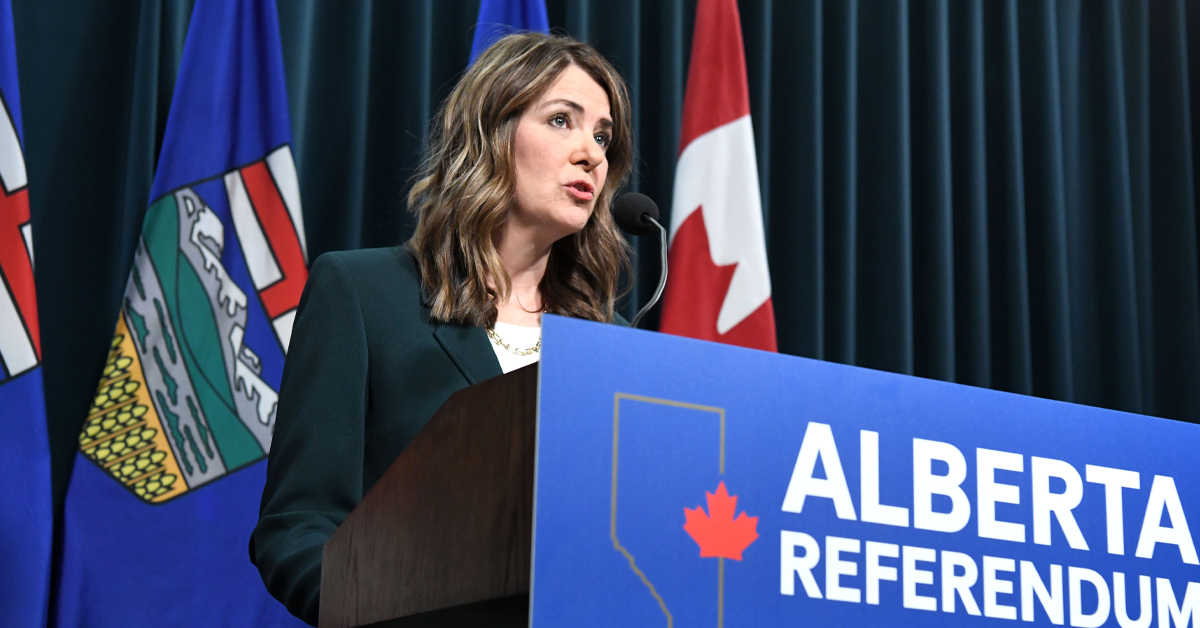
In an op-ed written for The Conversation, associate professors from University of Victoria, Gina Starblanket and James Rowe accuse Alberta Premier Danielle Smith of spreading “dangerous rhetoric” which threatens the Constitution and treaty rights.
In scheduling a referendum to be held asking if Albertans want to hold a binding referendum, Premier Smith may be trying to pacify sovereigntist sentiment within Alberta, but she isn’t threatening the Constitution or any treaty rights.
Her public statements have been expressly in support of federalism and don’t constitute dangerous rhetoric by any measure.
The Supreme Court reference case on the secession of Quebec determined that provincial secession has a legal pathway to pursue without constitutional roadblocks. The Clarity Act reinforced and codified that provincial right.
The professors dive right into what they called “settler colonial” borders. It’s a way to frame the makeup of Canada as being a construct of the Crown that doesn’t apply to Indigenous people who are considered to be nations unto themselves.
Ironically, the professors also claim that the Constitution must be adhered to though it is the settler colonial document that defines the borders and rights of the provinces created by them.
While a King’s Court justice has determined that petitioning for an independence referendum has clashed with the duty to consent with Indigenous peoples, it hasn’t stated that provincial independence would violate or invalidate treaties.
The obligations inherent within treaties are transferable. They were initially signed agreements between Indigenous leaders and representatives of the Crown under Queen Victoria and Alberta was considered part of the Northwest Territories at the time.
When the province was created in 1905, new local authorities and boundaries were created. None of that impacted treaty rights. When the Natural Resources Transfer agreement ceded responsibility of Crown land to the provinces in 1930, treaty rights remained intact. Jurisdictional obligations can change while maintaining treaty rights.
Western Canadian treaties expressly say the signatories will “cede, release, surrender, and yield up to the Government of Canada for Her Majesty the Queen and her successors for ever all their rights, titles, and privileges whatsoever to the lands included within the following limits...”
The disposition of lands outside of reserves lands under the authority of the government of the day. Right of access and hunting privileges must be maintained for Indigenous people. Provincial secession won’t extinguish those rights.
A large survey conducted by Mainstreet Research for Act for Alberta found that 46% of Indigenous people support Alberta independence. It appears Indigenous people themselves don’t fear that independence would lead to a loss of treaty rights.
As far as consultation goes, there is no form of consultation more inclusive than a referendum.
In allowing a democratic exercise consulting Albertans on the issue of provincial independence, Premier Danielle Smith is threatening neither the constitution nor any treaty rights.
Signup

The legacy media is counting on one thing: that you'll see the false headline and never see the correction. Don't let them get away with it.
Sign up for email updates from Alberta Fact Check and we'll send every new fact check straight to you the moment it's published. You'll always know what was said, who said it, and exactly where they got it wrong. It's free, it takes ten seconds, and it's the easiest way to stay one step ahead of the spin.